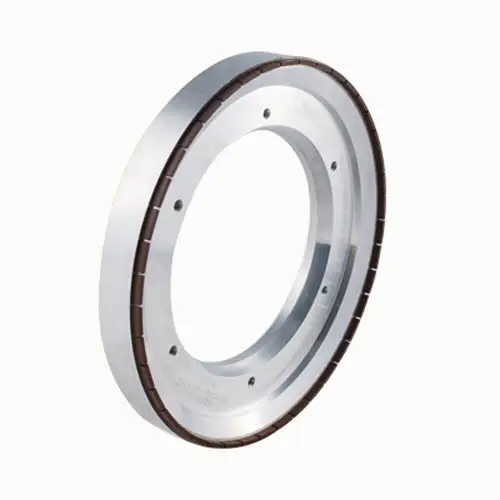
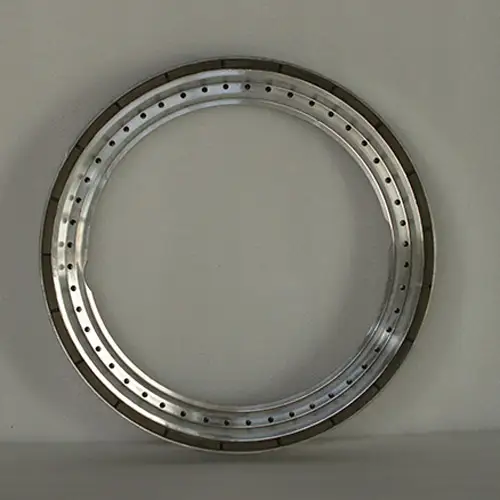
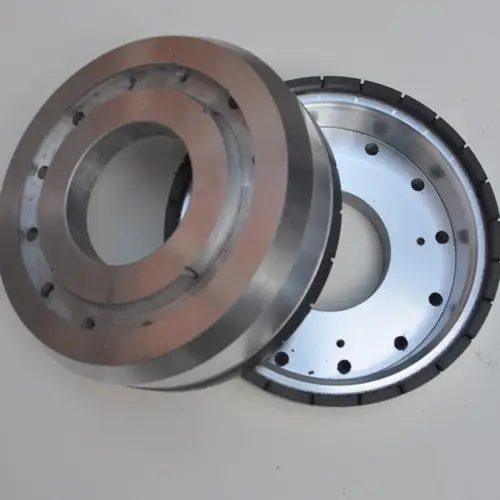
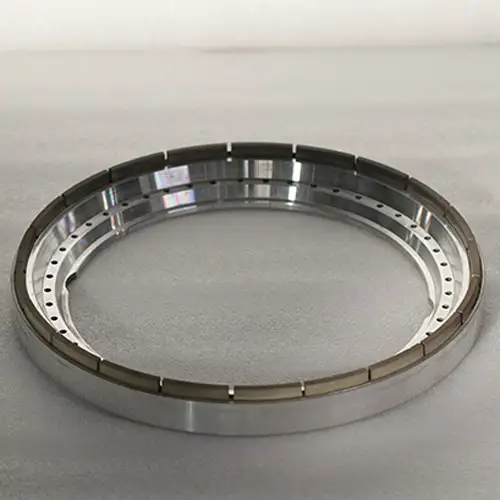
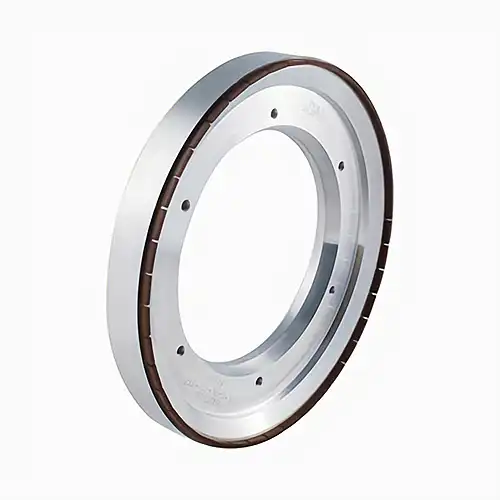
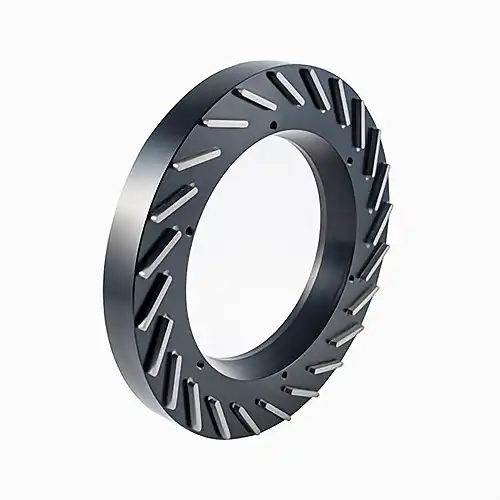
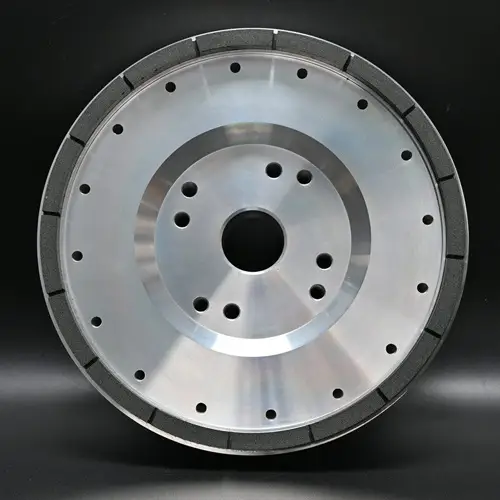
Wafer back grinding wheel can be used for back thinning, front grinding and fine grinding of discrete devices, integrated circuit substrate silicon wafers, sapphire epitaxial wafers, silicon wafers, arsenide, GaN wafers, silicon-based chips, etc.
Wafer back grinding wheel is used for polishing the back of wafers, reducing the thickness to achieve stacking and high-density packaging of integrated circuit.
The back grinding wheel can be used on grinding machines such as NTS, SHUWA, ENGIS, Okamoto, Disco, TSK, STRASBAUGH,etc.
Grinding Principle of Silicon Safer Processing
The porosity of the back grinding wheel is 10-50%.
Improve the blade performance and sharpness of the back grinding wheel, and effectively reduce the thickness of the damage layer on the wafer surface.
Increase chip holding capacity and improve surface roughness of the wafer.
Enhance cooling effect, and reduce the possibility of burns.
Application OF Wafer Back Grinding Process
The back diamond grinding wheel plays an important role in the chip preparation process.1) Reduce the overall thickness of the chip by thinning technology, it helps heat dissipation and integration. 2) Reduce the thickness of the damaged layer and surface roughness on the wafer surface, and release the internal stress caused by various processes before thinning, and reduce the degree of chip collapse during the cutting process of dicing blades.
Wafer back grinding is usually achieved by self rotating grinding of wafers, which includes rough and fine grinding processes.
Wafer back grinding wheel parameters
Rough grinding and thinning: Remove the cutting marks and damage layers caused by the slicing processing on the surface of silicon carbide discs.
Resin Diamond Wheels
Vitrified Diamond Wheels
Metal Diamond Wheels
Fine grinding and thinning: Remove rough grinding marks to ensure the surface accuracy of the polished chip, achieving the requirements of surface roughness<3nm and TTV<3 µ m, and preparing for the next step of polishing.
The axial feed rate of rough grinding is high, and diamond grinding wheels with larger grain size are used to quickly remove about 90% of the machining allowance.The axial feed rate for fine grinding is relatively low, and diamond grinding wheels with extremely small grain size are used.
Summary of Back Grinding Problems
Irregular debris
If it appears during initial installation, the back grinding wheel may not have been leveled. If the back grinding wheel has been leveled, the hardness of the grinding wheel is too high.The feed rate exceeds the cutting capacity of the grinding wheel.
Dress the grinding wheel.Adjust the hardness of the grinding wheel which can reduce the spindle speed. Reduce the feed rate;
Slips along the grinding pattern
There are coarse abrasive particles in the grinding wheel.The abrasive detachment on the surface of the grinding wheel does not match the wear rate of the bonding agent.
Strictly control the cleanliness conditions of the grinding wheel production process and the purity of the raw materials. Sharpen the grinding wheel or reduce the hardness of the bonding agent.
Chipping
Too highhardness of the back grinding wheel Too coarse grain size
Adjust the hardness of the grinding wheel. Select fine-grained abrasives while meeting the feed rate requirements
roughness and coarse grain size of grinding wheel
coarse grain size of grinding wheel .The end feed rate is too high. Surface blockage of grinding wheel.
Select fine-grained abrasives while meeting the requirements of feed rate. Reduce the axial feed rate at the end, increase the sharpening time, increase the grinding wheel speed, and reduce the worktable speed. Dress the grinding wheel.
Bad TTV value
The cutting ability of the back grinding wheel is insufficient. Uneven suction disc or poor breathability uniformity. The spindle angle of the machine tool is not adjusted properly.
Improve the sharpness of the grinding wheel; Repair the suction disc or blow back air. Adjust the spindle inclination angle.
Large warpage
The back grinding wheel is not sharp. The feed rate is too high
Choose right bonding agent and back grinding wheels with right width, or increase the sharpness of the grinding wheel. Reduce the feed rate.
Burn
The hardness of the back grinding wheel is too high. The feed rate exceeds the cutting capacity of the grinding wheel.
Improve the sharpness of the back grinding wheel by selecting large pores and narrow width grinding wheel. Reduce the feed rate appropriately.
Successful Back Grinding Cases
Specification of back grinding wheel
6A2T/C 282×30×228.6×3×5 D2000 B 100
Silicon wafer size: 4-6 inch
Testing equipment:STRASBAUGH 7AF
Grinding conditions: Total removal amount of 25μm
Specification of back grinding wheel
6A2T/C 254×33×155×3×5 D1500 B 100 Silicon wafer size: 4-6 inch Testing equipment:OKAMOTO Grinding conditions:
Total removal amount of 25μm
Feed speed P1:22μm/min P2:10μm/min
We provide wafer diamond back grinding wheels with standard parameters, as well as customized services. Customized back grinding wheels can also be used for polishing other products such as sapphire.
Performance comparison chart of bonding agent for diamond and CBN grinding wheels
Type of Binder
Self-Sharpening
Sharpness
Life
Dressing Difficulty
Price
Metal
3/5
3/5
3/5
5/5
4/5
Resin
5/5
4.5/5
3/5
1/5
2.5/5
Vitrified
5/5
5/5
4/5
1/5
4/5
Electroplated
4.5/5
5/5
3/5
0.5/5
4/5
Metal-Resin
4/5
4.5/5
5/5
3/5
5/5
Table of grinding objects of diamond VS CBN grinding wheels