According to the different chemical and physical properties of the optical glass being ground, corresponding metal and resin bond can be selected to meet the processing requirements of different materials of glass with a wear degree of 60-450.
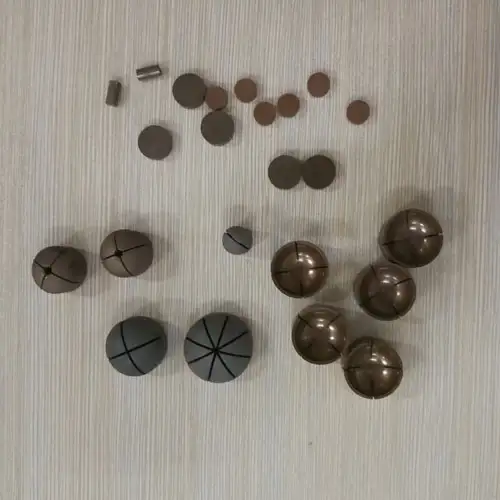
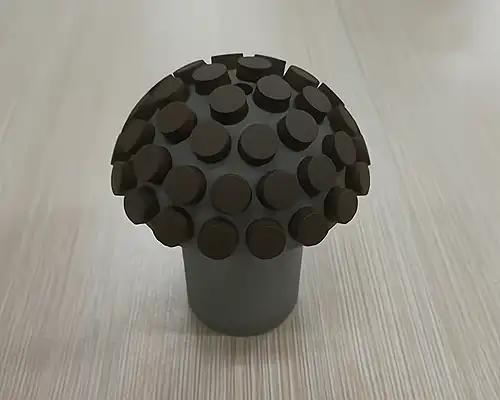
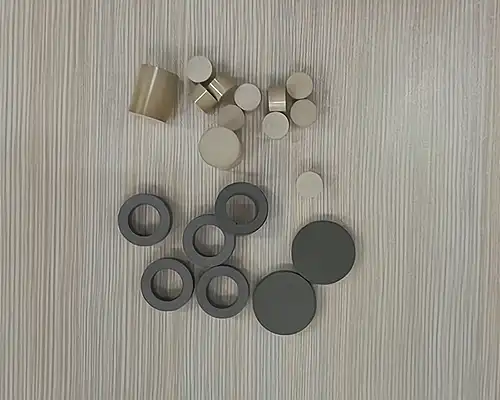
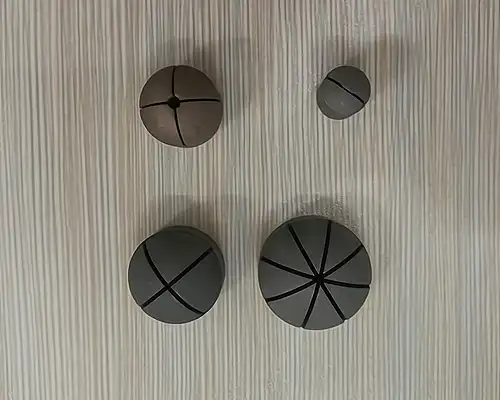
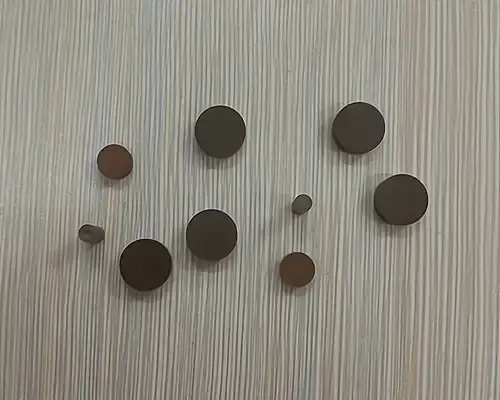
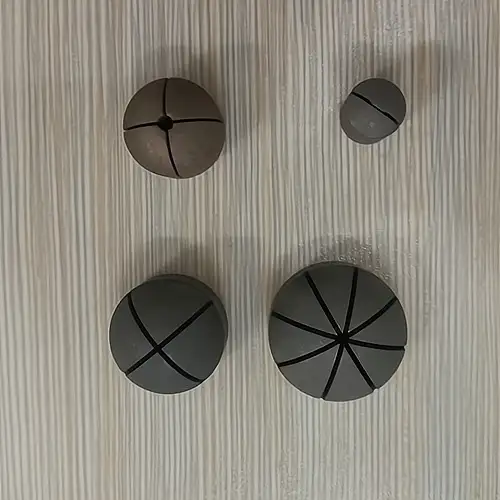
Diamond pellet is a type of hot pressed and sintered diamond product, which are usually resin bond and metal bond. It is used for polishing optical elements such as optical glass, lenses, and ceramics.
It can be applied to various stages of optical glass cold processing such as finish, super finish grinding by adjusting the bonding agent, diamond grain size and diamond concentration.
Optical Glass Cold Processing
When finish grinding, the first step is to remove scratches left by rough grinding, and about 0.1mm needs to be removed on each surface. The second step finish grinding, as known as super finish grinding, is mainly used to remove the deeper scratches of the first step finish grinding, and about 0.005mm-0.01mm on each surface, meeting the requirements before polishing. The quality of finish grinding has a significant impact on polishing.
Bonding Agent of Diamond Pellet
There are metal bond diamond pellets and resin bond diamond pellets.
Metal Bond Diamond Pellet
Metal bond diamond pellet:
Strong bonding force, good wear resistance, low wear, long service life, can withstand large load grinding, but high cost, slightly poor self sharpening, passivated diamond particles cannot fall off timely,not fully cooling during grinding, easily blocked and heat
Resin bond diamond pellet:
small surface roughness, not easily blocked and heat, poor wear resistance, not suitable for heavy load grinding
Resin Bond Diamond Pellet
The main function of bonding agent of diamond pellets is to hold the diamond particles. The hardness of bonding agent directly affects the falling off speed of passivated diamond particles, which affects the grinding efficiency and surface quality of the workpieces.
Therefore, the hardness of bonding agent should match the blunting speed of diamond particles and wear resistance of the glass, that is, the wear speed of the bonding agent should be roughly the same as the wear speed of the diamond.
The harder bonding agent diamond pellets process the better surface shape accuracy, but the surface roughness is poorer.
The softer bonding agent diamond pellets process the better surface roughness of workpieces, but the surface shape accuracy is poorer.
Concentration of Diamond pellets
The concentration of diamond pellet refers to the weigh of diamond per cubic centimeter of the effective volume of diamond pellet. It is specified that 4.39 carats of diamond are contained per cubic centimeter as 100% concentration, with 1 carat=0.2g. The concentration of 50% refers to diamond content is 2.2 carats per cubic centimeter.
If the concentration is too high, the bonding agent will be relatively reduced, which will weaken the holding force on the diamond grains. The diamond grains will fall off early. If the concentration is too low, the diamond grains will be reduced, and the cutting force acting on each diamond grain will increase, which may also cause the diamond grains to fall off too early.
Grain Size of Diamond Pellets
Grain size: W5, W7, W10, W14, W20, W28, W40, etc.
The finish grinding process is between milling and polishing process. It is important for choosing suitable diamond pellet.
The principle of selection is that the diamond pellets must be able to remove the rough grinding marks left by the previous process, while ensuring that the fine scratches produced in this process are thoroughly removed during subsequent polishing.
For the optics commonly used in ordinary telescopes, it usually only adopts metal bond diamond pellet with W14 or W10 for one grinding process( the surface roughness Ra value of the optical glass 0.16-0.32μm), and then proceed to the polishing process.
For instruments such as microscopes and cameras, it has high requirements for optics. Two finish grinding processes should be used. First, metal bond diamond pellets with W20 or W14 can be used for one process of finish grinding, and then resin bond diamond pellets with W10 or W7 can be used for the second process of finish grinding. ( The surface roughness Ra value of optics should be below 0.1μm)
The grain size of diamond pellet is to fine, and the chrysanthemum shaped scratches left on the surface of optical glass after finish grinding can be seen, or two spots can be left on the surface of optical glass after polishing.
Diamond pellets Shape
The shape of diamond finish pellet is usually circular, and there are also rectangular or polygonal diamond finish pellet, but they are rarely used.
Specifications of Diamond Pellets
The working surface of the diamond finish pellet is divided into flat, convex, and concave type.
The size of diamond finish pellet includes diameter φ,thickness T, and curvature radius R. The size of diamond finish pellet depends on the curvature radius, aperture, and other diameter of the matrix.
Diamond grain size, bonding agent type, shape, diameter, thickness, workpiece materials and etc.
Our company have world-class diamond production and inspection equipment, combined with scientific production management. The performance indicators of all different batches of products are strictly consistent, ensuring that the lenses to be processed are no scratches and the aperture is stable and consistent. Our products are sold well in many countries such as the United States, Israel, Germany, India, and etc. and have been approved by customers.
Related Products
Diamond Molding Head for Optical Glass
Milling Grinding Wheel for Optical Glass
Diamond Side Grinding Wheel For Optical Glass
Diamond Tools for Optical Glass
INQUIRY
Please Feel free to give your inquiry in the form below. We will reply you in 24 hours.