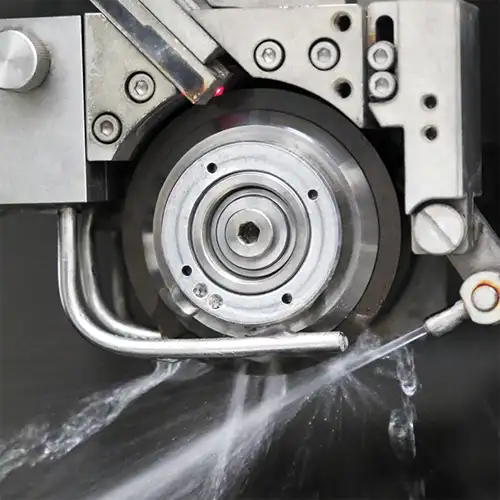
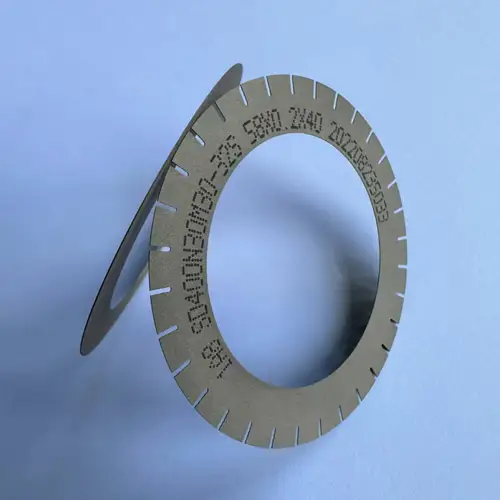
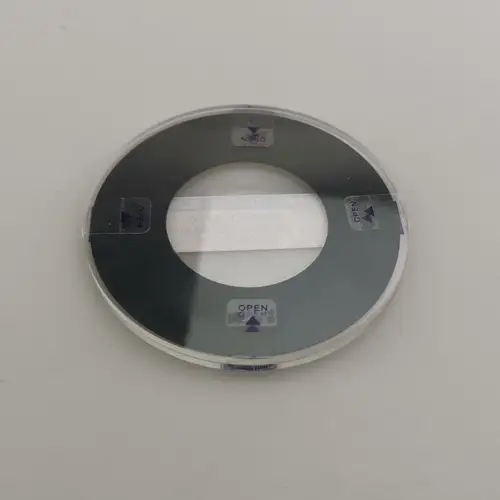
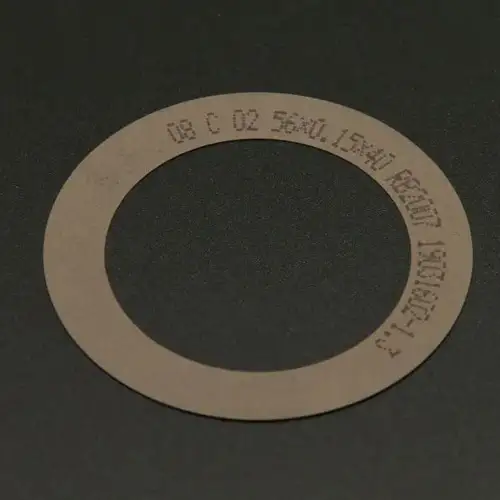
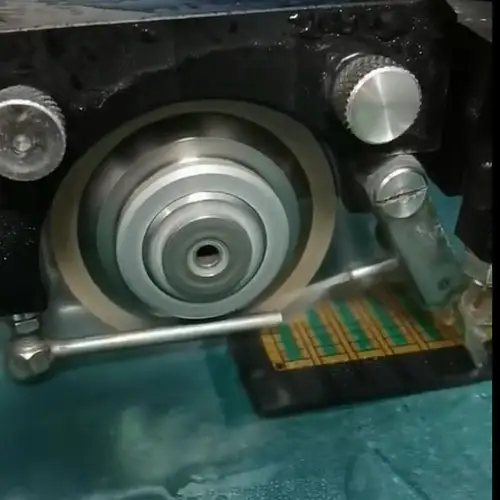
Diamond dicing blade for ceramic substrates is made of diamond and metal or resin bond by sintering, with sharpness, long life, smooth cutting edges and no burrs. In the actual cutting process, there are many formulas for diamond dicing blade, and doing the test before cutting is essential.
Electroplated Blade
Metal Bond Blade
Resin Bond Blade
About Ceramic Substrate
Ceramic substrate refers to a special process board that copper foil is directly bonded to the surface (single-sided or double-sided) of aluminum oxide(Al2O3) or aluminum nitride(AIN) ceramic substrate at high temperature. The ultra-thin composite substrate has excellent electrical insulation performance, high thermal conductivity, and high adhesion strength. It can also etch various patterns like PCB and has great current carrying capacity.
At present, the main materials of ceramic substrates include aluminum oxide, aluminum nitride, silicon nitride, silicon carbide, etc.
Aluminum oxide&Aluminum nitride
Aluminum oxide is usually used in electronic applications such as circuit board, as well as in the production of catalytic converters, high-temperature furnace tubes, and biomedical implants. Aluminum oxide ceramic substrate is inexpensive and has the widest range of applications.
Aluminum nitride has high thermal conductivity, which is several times that of aluminum oxide ceramic substrates.
It is widely used in high-power LED lighting, IGBT modules, optical communication and laser, aerospace, and military fields.
Silicon nitride&Silicon carbide:
Silicon nitride has excellent mechanical properties, high strength and hardness, and can withstand large mechanical stresses. Currently, silicon nitride ceramic substrate is mainly used in fields such as rail Transit, smart grids, and aerospace.
Silicon carbide ceramic substrate has high thermal conductivity, high strength, high temperature resistance, and chemical corrosion resistance. It can be used in the photovoltaic industry, aerospace, and new energy industries.
Cutting Case of Ceramic Substrate
When cutting ceramic substrates, pay attention to the material differentiation, and surface metal can affect cutting quality. There are resin bond and metal bond diamond dicing blade.
1:Resin Bond Diamond Dicing Blade For Aluminum Nitride Ceramic
Test Result
Front chipping, side chipping and back chipping are all within the control range of chipping defects, with front chipping<25 μ m, side chipping <25 μ m, and back chipping<50 μ m.
The blade marks on the back of film inspection are smooth, and the blade marks on the side are good.
2:Metal Bond Diamond Dicing Blade For Alumina Ceramics
Front chipping is less than 10 μ m, back chipping is less 30μ m, the chipping length is less than one-third of the chip edge length, and the chipping width is less than 50 μ m, the side chipping is less than 30μ m. In the later stage of blade cutting, the cutting surface is vertical, and there is no trapezoid or R angle on the back of the product.
Due to the diversity of ceramic substrates, testing is required for the selection of diamond dicing blade. According to the testing results, adjust the ratio of diamond and bonding agent, as well as the hardness of the bond, meeting the specific cutting objects.
Related Products
Diamond Blade for cutting DFN Package
Diamond Disc For Cutting EMC Package
Diamond Dicing Blade for PCB
Dicing Blade Dressing Board
INQUIRY
Please Feel free to give your inquiry in the form below. We will reply you in 24 hours.