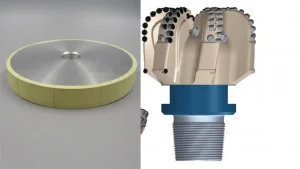
Mining & Construction Tools:Rock drill bits, picks
So Which Bond Is The Best Choice, Vitrified Or Resin? Let’s Compare Them.
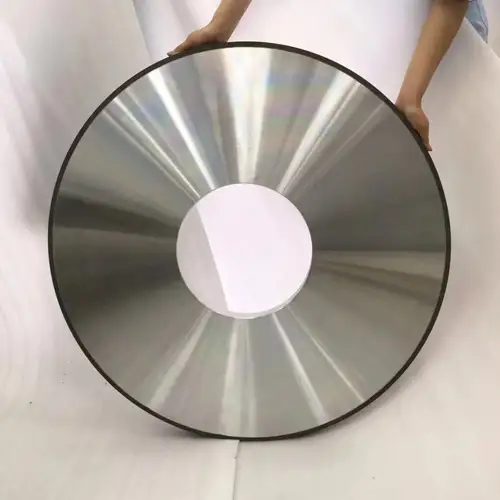
Resin Diamond Wheel for Tungsten Carbide
Advantage Of Resin Diamond WheeL
Excellent Elasticity: Thanks to the inherent flexibility of resin bonds, resin-bonded diamond wheels can effectively absorb vibrations generated during grinding, making them more suitable for precision machining. When grinding tungsten carbide, they deliver exceptionally high surface quality.
Superior Surface Finish: For applications demanding high surface smoothness on carbide workpieces, resin-bonded diamond wheels excel, achieving remarkable precision during the grinding process.
Additionally, nearly every manufacturer has the capability to produce resin-bonded wheels, giving customers greater flexibility in supplier selection.
Disadvantages of Resin Diamond Wheel
Poor Wear Resistance: Resin bonds exhibit relatively low wear resistance, resulting in shorter wheel lifespan. Frequent dressing or wheel replacement is required, which can negatively impact overall production efficiency.
Poor Heat Resistance: Conventional resin diamond wheels typically use phenolic resin, which tends to deform or char under high-speed, heavy-load grinding due to excessive heat. This can lead to wheel distortion or workpiece burn.
Polyimide Resin Diamond Wheels, however, represent an advanced alternative. Capable of withstanding higher grinding temperatures, they can even be used in dry grinding applications, marking a significant performance enhancement for resin-bonded wheels.
Case Study: Resin Diamond Wheel Grinding Application
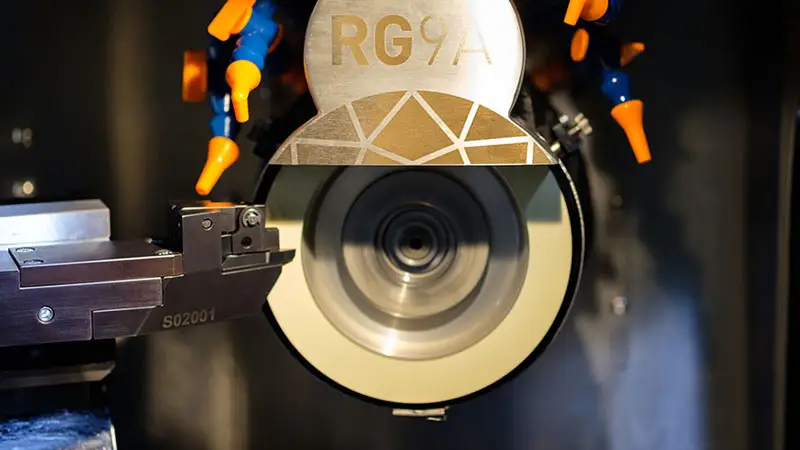
Here is a classic case study and application analysis of resin diamond wheel for tungsten carbide workpieces, incorporating industry best practices and key process considerations:
Background
A precision cutting tool manufacturer required machining of a batch of WC-Co carbide end mills (hardness ≥ HRA 90) with stringent specifications:
Edge roughness: Ra ≤ 0.2μm
Dimensional tolerance: ±0.005mm
Burr-free edges
Initially, conventional silicon carbide (SiC) wheels were used, but they proved inefficient with rapid wear. After switching to resin-bonded diamond wheels (grit size D15-D30), significant improvements in machining quality were achieved.
Key Process Parameters
Grinding Wheel Specifications
Abrasive: Synthetic diamond (Grit size D20, equivalent to European standard F230) Bond: Modified phenolic resin (enhanced heat resistance) Concentration: 75% (diamond content by volume) Shape: 1A1 straight wheel (OD: 150mm, Thickness: 10mm)
Equipment & Operating Parameters
Machine: High-precision CNC tool grinder (Spindle speed: 3000 rpm, Coolant: 5% emulsion) Grinding Allowance: Roughing: 0.02mm/pass Finishing: 0.005mm/pass Feed Rate: 0.5 m/min (reduced to 0.2 m/min during finishing) Cooling System High-pressure internal coolant (0.8MPa) to prevent thermal degradation of resin bond.
Technical Advantages Demonstrated
Efficiency Gains
3x higher metal removal rate, reducing processing time per piece from 15 minutes to 5 minutes.
Quality Improvements
Chip-free cutting edges with consistent surface roughness (Ra 0.15-0.18μm).
80% reduction in wheel wear, extending service life to 500 pieces per dressing cycle.
Cost Optimization
Despite higher initial cost of diamond wheels, total operating costs decreased by 30% through:
Reduced tool change downtime
Lower scrap rates
Resin Bond Diamond Wheels
Vitrified Bond Diamond Wheels
Hybrid Bond Fluting Grinding Wheels
Diamond Grinding Wheel for Thermal Spray Coating
External Grinding Wheels
Double Side Grinding Wheel
Surface Grinding Wheels
Centerless Grinding Wheels
Common Issues & Solutions
Issue 1: Wheel Loading
• Symptom:
Increased grinding force due to chip adhesion. • Solution:
Switch to resin-bonded wheels with graphite filler to enhance self-sharpening.
Localized blueing during finish grinding. • Solution:
Optimize wheel hardness (e.g., change from K-grade to J-grade).
Reduce bond rigidity (select softer bond formulations).
Vitrified Diamond Wheel for Tungsten Carbide
Advantages of Vitrified Diamond Wheel For Tungsten Carbide
High Wear Resistance: The vitrified bond offers exceptional wear resistance and self-sharpening properties, enabling the wheel to maintain sharpness over extended periods.
This minimizes the need for dressing, enhances production continuity, and reduces downtime for wheel replacement.
Excellent Heat Resistance: During high-speed, heavy-duty grinding, vitrified wheels effectively withstand high temperatures, preventing deformation and avoiding thermal damage to carbide workpieces.
Superior Shape Retention: These wheels exhibit outstanding form-holding capability, making them ideal for high-precision and consistency-critical applications that demand stringent grinding standards.
Disadvantages of Vitrified Diamond Wheels
Low Elasticity: Due to their high rigidity, vitrified bonds are prone to vibration during operation, which may compromise surface finish. This necessitates the use of high-rigidity grinding machines to compensate for the limitation.
Higher Cost: The manufacturing process for vitrified wheels is complex, resulting in higher costs compared to resin-bonded diamond wheels. Additionally, fewer manufacturers possess the specialized technology to produce them, leading to inconsistent quality across suppliers.
Case Study: Vitrified Diamond Wheel for Tungsten Carbide Grinding
Precision Grinding of Carbide Cutting Tools
Application: Edge finishing for carbide end mills and drill bits
Wheel Selection:
Abrasive: Diamond (for high-hardness carbides) or CBN (for high-cobalt grades) Bond: Porous vitrified bond (Al₂O₃ or SiO₂-based) to enhance chip clearance and heat dissipation Grit Size: 80#–200# (coarse grit for roughing, fine grit for finishing)
Process Parameters:
Peripheral Speed: 20–30 m/s (reduce for dry grinding to prevent overheating) Feed Rate: 0.002–0.01 mm/pass (micro-feeding for finishing to achieve Ra≤0.2μm) Results: A tool manufacturer achieved 30% longer tool life and chip-free edges when grinding YT15 carbide end mills with vitrified diamond wheels.
In tungsten carbide grinding, selecting the appropriate diamond grinding wheel is crucial for improving workpiece quality and machining efficiency. Resin diamond wheel for tungsten carbide excel in surface finish quality, but their frequent dressing requirements and limitations in heat/wear resistance restrict their application under demanding conditions.
In contrast, vitrified diamond wheels are increasingly adopted in carbide grinding due to their stability, exceptional wear resistance, and reduced dressing frequency. Manufacturers should make comprehensive decisions based on their specific machining conditions and budget constraints, while considering both machine tool rigidity and wheel performance characteristics.